Why You Can Understand a Language But Still Can't Speak It (And How to Fix That)
You follow podcasts, read articles, understand most of what you hear - so why do you freeze the moment someone asks you to speak? Here's what's actually going on.
Polyato Team
March 20, 2026
You've been studying Spanish for two years. You can follow a podcast if they speak slowly. You can read a news article with a dictionary nearby. You understood 80% of that Netflix show last week without subtitles.
Then someone at a party hears you're learning Spanish and says, "Oh cool, say something!"
Your mind goes blank.
This isn't a personal failing. It's one of the most documented and frustrating experiences in language learning - and once you understand why it happens, you can actually do something about it.
TL;DR
- Receptive skills (reading and listening) develop faster than productive skills (speaking), so you can understand a language long before you can speak it fluently.
- The gap doesn't close through more input - it closes through deliberate output practice with feedback.
- Voice messages to an AI tutor hit the ideal middle ground: real spoken output, zero live performance pressure, and available any time.
- Starting with just 30 seconds a day beats waiting until you feel ready - which, without practice, never comes.
The Receptive-Productive Gap Is Real (and Normal)
Linguists draw a clear line between two types of language skill.
Receptive skills are understanding: listening and reading. You're receiving language someone else produced and making sense of it.
Productive skills are output: speaking and writing. You're generating language from scratch, in real time, under pressure.
Here's the thing - receptive skills almost always develop faster. You can recognize a word you've heard twenty times long before you can reliably produce it in a sentence. Your brain needs far more exposure to a word before it becomes available for spontaneous output. This is why you can understand a native speaker but not respond at their speed.
The gap isn't a sign you're learning wrong. It's just how acquisition works. The problem is that most learners - especially self-taught ones - accidentally train almost exclusively on the receptive side. They listen to podcasts, watch TV, read graded readers. All input. No output.
You can spend years in that zone and never close the gap, because the gap doesn't close on its own.
Why Learners Avoid Speaking Practice
Knowing the gap exists doesn't automatically make people practice speaking. There are real reasons people avoid it.
Fear of judgment. Speaking a foreign language in front of another person is vulnerable. You're revealing exactly how much you don't know. Mispronouncing a word feels embarrassing in a way that writing a wrong answer doesn't. The social stakes feel high even when logically you know they're not.
No accessible environment. Most people don't have a native speaker sitting across from them ready to practice. Language exchange apps require scheduling. Tutors cost money. Classes only happen a few times a week. The moment you want to practice - often at 10pm after work - there's no one available.
The "I'll speak when I'm ready" trap. This is the most damaging one. It sounds reasonable: get your grammar and vocabulary to a higher level, then start speaking. The logic makes intuitive sense.
But it doesn't work. Speaking confidence doesn't come from knowing more - it comes from the act of speaking itself. Every experienced language teacher will tell you this, and research on language acquisition backs it up. The anxiety doesn't go away after more studying. It goes away after doing it hundreds of times in low-stakes situations.
Waiting until you're ready usually means never starting.
What Actually Builds Speaking Ability
More input is not the answer - at least not once you're past the absolute beginner stage.
Speaking ability develops through output plus feedback. You produce something, you notice where it broke down, and you adjust. That loop - produce, notice, adjust - is what builds fluency. Not more listening, not more vocabulary lists.
The research term for this is "pushed output." When you're forced to produce language rather than just comprehend it, you notice gaps you didn't know you had. You can understand the subjunctive when you hear it. But when you try to use it yourself, you suddenly realize you have no idea how to deploy it in a real sentence. That moment of noticing is where learning happens.
The challenge is finding the right environment for that loop to run.
Live conversation is powerful, but high-pressure. There's no pause button. You have to respond in real time. If you're already anxious about speaking, this can create a freeze response that makes the experience feel negative and discourages repetition.
What you need is something that lets you produce output - real, spoken output - without the live pressure.
Why Voice Messages Work Differently Than a Live Call
There's a specific format that hits this target better than most people realize: the voice message.
Voice messages are async. You record when you're ready. There's no one waiting for you on the other end. If you mess up halfway through, you can stop, think, and try again. You can listen back to yourself - which is uncomfortable at first, but useful - and notice exactly where your pronunciation or grammar fell apart.
Compare this to:
A language exchange partner. You have to coordinate schedules. There's social pressure - you don't want to waste their time, you want to seem competent, the relationship has stakes. If the conversation goes badly, it's awkward. Many people cancel sessions when they're not feeling confident, which means they practice less exactly when they need it most.
An online tutor. Expensive. Also scheduled. Also involves live performance pressure. Great for structured feedback, but not something most people can do daily.
Speaking to yourself in a mirror. No feedback at all. You don't know if what you said was correct.
Voice messages to an AI tutor land somewhere that none of these options reach. You're speaking - real, spoken words, not typed - but there's no live audience. The AI responds on its own schedule. You're not performing for anyone.
This is the specific environment that makes consistent speaking practice actually happen, because the friction and fear are low enough that you'll do it every day instead of avoiding it.
Polyato's voice message feature lives inside WhatsApp across 80+ languages, which means you're practicing in the same place you already send messages every day. There's no app to open, no session to schedule - you send a voice note to Polly and get a response back. The format is familiar and low-pressure by design.
Practical Ways to Start (Even If the Idea Makes You Anxious)
The first few recordings are the hardest. After that, it becomes routine. Here's how to make starting easier.
Start with 30 seconds. Don't try to have a full conversation. Record 30 seconds describing something in your target language - what you had for lunch, what you can see from your window, what you're planning to do later. That's it. Short recordings lower the mental load and make the habit easier to build.
Describe your environment. This is a specific technique that works well because it's concrete. Look around the room you're in and describe what you see. "There is a table. On the table there is a laptop and a glass of water. The window is open." Simple, grounded, requires no abstract thought. It forces you to produce vocabulary for ordinary objects, which is exactly the vocabulary you'll use in real conversation.
Shadow a sentence before sending your own. Find one sentence - from a podcast, a show, a phrase book - and say it out loud several times until it feels natural. Then record yourself saying something similar in your own words. This warms up your mouth and your brain before you try to produce original language.
Don't edit for perfect. The goal is output, not perfection. Stumbling, pausing, starting a sentence over - all of that is fine and normal. Native speakers do it too. The point is getting the words out.
Make it daily. Even two or three voice messages a day is more productive than one long tutoring session per week. Frequency matters more than duration. Your brain needs repeated, distributed practice to move vocabulary from receptive to productive access. Daily short sessions beat weekly long ones, consistently.
If you're looking for more on building daily habits that stick, this post on the five tips for daily language practice covers the habit mechanics in more depth.
The AI Difference: Why "No Social Stakes" Matters
One thing worth naming directly: practicing with an AI is different from practicing with a person, and for speaking practice specifically, that difference is mostly an advantage.
With a person, you're managing two things at once: the language, and the social relationship. You don't want to seem incompetent. You don't want to waste their time. You want to be polite and interesting. That cognitive overhead takes up mental bandwidth you need for the language.
With an AI, the social layer disappears. You can say something wrong and not feel embarrassed. You can ask for the same correction five times. You can be boring - just describe your coffee mug in halting Italian for the fifth day in a row - and no one minds. That freedom to be imperfect without social consequence is what allows you to practice at the volume you actually need.
This doesn't mean AI replaces human conversation. Eventually you want both. But for closing the speaking-reading gap - for the daily reps of output practice that build fluency - AI is uniquely suited to the job in a way that human partners aren't.
If you've struggled with sticking to a language learning routine before, removing the social friction is part of why AI-based practice tends to be more consistent.
The Gap Closes When You Start Talking
You already have more language knowledge than you think. The vocabulary is in there. The grammar patterns are half-formed. What's missing is the repetition of producing them under low pressure until they become automatic.
That's not a romantic or complicated insight. It just means you have to start speaking - before you feel ready, in short bursts, somewhere the stakes are low enough that you'll actually do it.
The speaking-reading gap is a result of what you've been practicing, not a ceiling on what you're capable of. The way to close it is the same way you got where you are: consistent practice, built into your actual life, at a volume that compounds over time.
For the habit side of that - making the daily reps actually happen - these five tips for building a language practice habit are worth reading alongside this one.
Frequently Asked Questions
Why can I understand a language but not speak it?
Understanding a language (a receptive skill) uses different mental processes than speaking it (a productive skill). Receptive skills develop faster because recognizing a word requires less neural work than retrieving and producing it spontaneously. Most learners also spend far more time on input - listening and reading - than on output, which widens the gap over time. Closing it requires deliberate speaking practice, not more studying.
How long does it take to get comfortable speaking a foreign language?
It varies by language, time invested, and how much speaking practice you do. But the more relevant variable is volume of output practice, not time elapsed. Someone who records a few voice messages daily will improve their speaking faster than someone who studies grammar for the same number of hours. Most intermediate learners notice meaningful improvement in spoken fluency within a few months of consistent daily practice.
Is it normal to freeze when speaking another language even if you know it well?
Yes - this is very common and doesn't mean your level is lower than you think. Freezing under pressure is a response to performance anxiety and real-time cognitive load. The solution is not more studying; it's more low-stakes speaking practice until producing language becomes more automatic. The anxiety decreases through repetition, not through preparation.
What is the best way to practice speaking a language alone?
Speaking to an AI tutor via voice message is one of the most effective solo options because you get real spoken output practice plus feedback - without the scheduling friction or social pressure of a human partner. Other options include shadowing (repeating audio from native speakers), recording yourself and listening back, and narrating your daily activities aloud in your target language.
How are AI voice messages different from language exchange apps?
Language exchange apps connect you with real people, which means scheduling, social stakes, and mutual performance pressure. AI voice messages are asynchronous - you record when you want, with no live audience, and receive feedback without real-time pressure. This makes them easier to do consistently, which matters more than any single session being high-quality. AI is also available at any hour, never cancels, and has unlimited patience for repetition.
Why doesn't more input (listening and reading) fix my speaking?
Input builds your receptive base - comprehension, vocabulary recognition, intuitive grammar. But speaking requires a different type of access to that knowledge: retrieval under time pressure, pronunciation, sentence construction in real time. The only way to train those skills is to use them. More input will not automatically transfer to speaking ability past a certain threshold; output practice is what closes the gap.
How do I start speaking practice if I feel too embarrassed to try?
Lower the stakes to near zero. Don't start with a live conversation partner - start by recording a 30-second voice message to an AI tutor where no human will ever judge your pronunciation. Describe something in your immediate environment. You don't have to be eloquent; you just have to produce words. Embarrassment decreases with repetition, not with more preparation.
Ready to start?
Learn any language through WhatsApp
Join thousands of learners building real conversational fluency with Polyato's AI tutor - right in your WhatsApp.
Get Started FreeRelated Articles
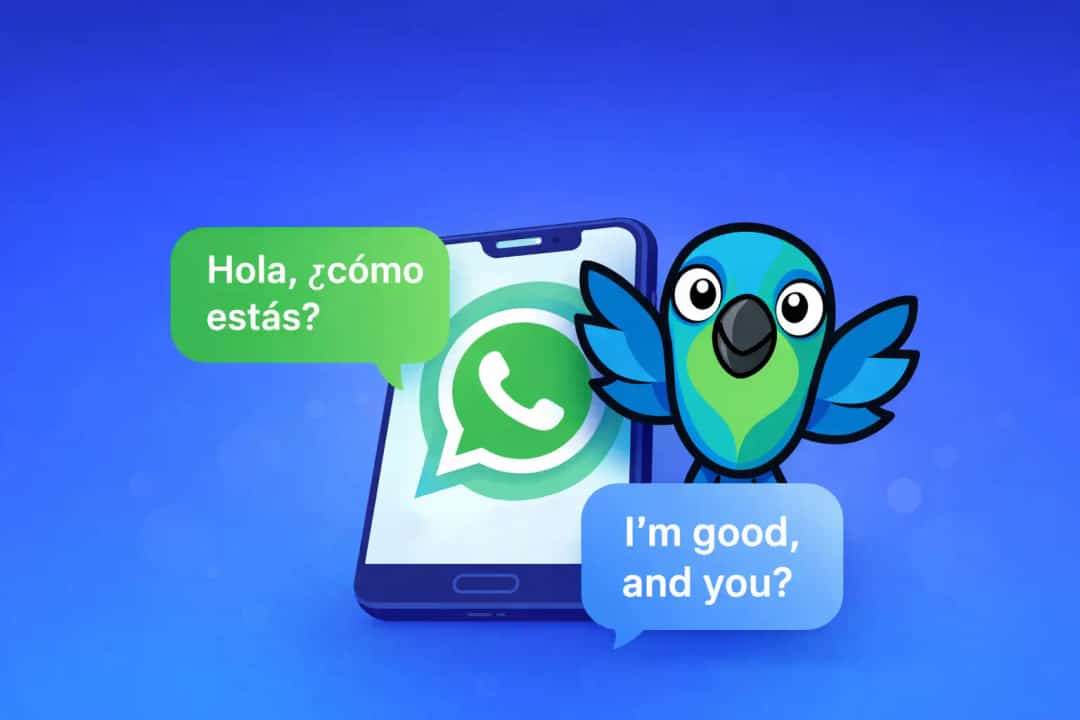
How Polyato Works: Your First Week Learning a Language on WhatsApp
A step-by-step look at what happens when you start learning a language with Polyato - from your first message to your first real conversation.
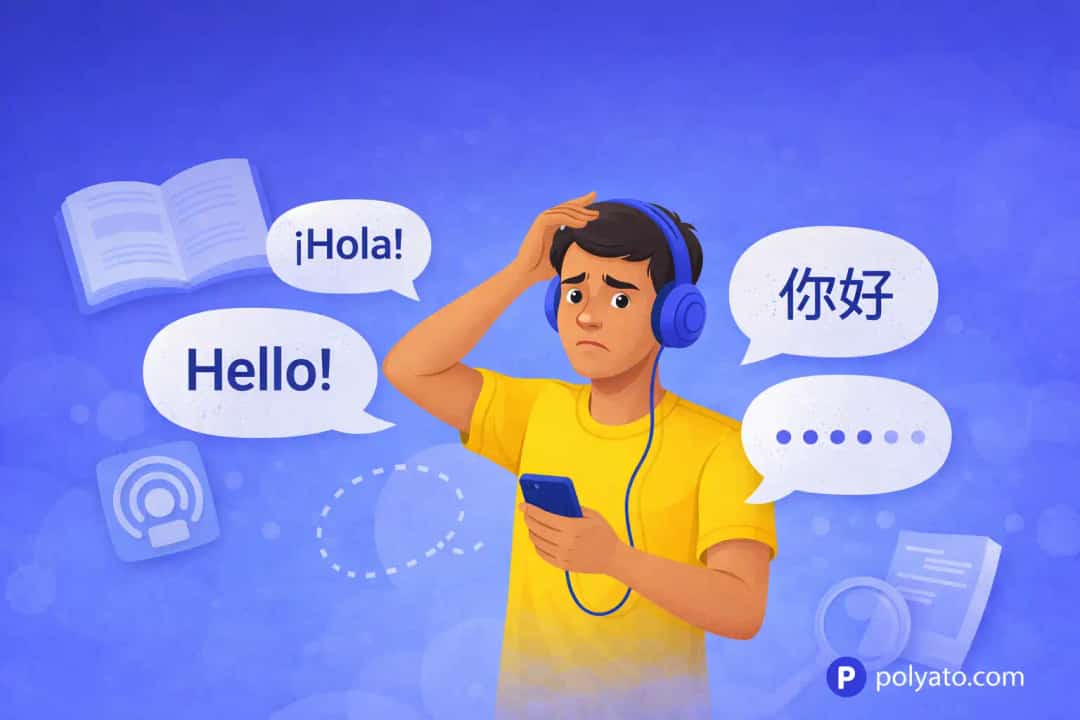
The Real Reason You Can't Stick to a Language (It's Not Laziness)
You haven't failed at language learning because you lack discipline. The real barrier is psychological - and it's more fixable than you think.
5 Tips for Building a Daily Language Practice Habit That Actually Sticks
Consistency beats intensity every time when it comes to language learning. Here are five research-backed strategies to make daily practice effortless - even on your busiest days.